
 86 15267043800
 86 15267043800

Canton Fair 2026: Beyond Home Goods Trends
The Canton Fair is a major sourcing event for international buyers looking for new home products, reliable suppliers, and fresh business opportunities. But finding products that look attractive is only the first step. The real challenge is choosing items that customers will buy, that fit your market, and that your business can sell profitably.
If you plan to attend the Canton Fair 2026 Phase 2, here is some suggestions based on our exhibition experience of these years on how to look beyond product trends and make smarter sourcing decisions, from evaluating market potential to turning samples into orders.
Canton Fair 2026 Phase 2
The 140th Canton Fair Phase 2 will take place from October 23 to 27, 2026, in Guangzhou, China. Its main theme is quality home life, with exhibition categories covering household products, ceramics, kitchenware and tableware, glass artware, home decorations, gifts, gardening products, furniture, and building and decorative materials.
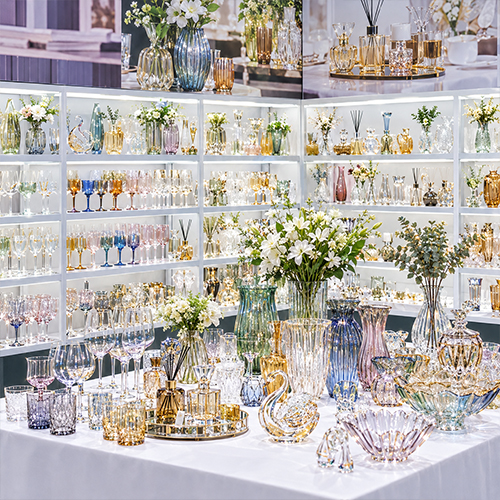
For buyers sourcing glassware, drinking glasses, wine glasses, kitchen accessories, and decorative home products, Phase 2 offers an opportunity to compare designs, materials, and suppliers in one place.
However, walking through exhibition halls without a clear buying strategy can waste valuable time. Instead of focusing only on what looks new, use the fair to answer three questions: Is there real demand for this product? Can it compete in my target market? Can the supplier deliver consistent quality at a workable cost?
Why Product Trends Alone Are Not Enough
The article "Canton Fair Trends: 4 Ways Decor Commands Premium Prices" explores trends in home goods at the Canton Fair and discusses how home decor items can command higher price points. While trends and fads can spark new ideas, popularity does not automatically translate into sales.
A decorative glass vase may look impressive on a display shelf, for example. Yet if it is fragile, expensive to ship, or difficult to package safely, the final selling price may be too high for your customers.
Before adding a trending product to your shortlist, consider these factors:
✅️ Customer demand: Does the product solve a problem or meet a clear preference?
✅️ Competition: Are similar items already widely available in your market?
✅️ Profit margin: Can you cover the product cost, shipping, duties, packaging, marketing, and other expenses?
✅️ Practicality: Is the item easy to store, transport, clean, and use?
✅️ Long-term value: Is it likely to sell beyond a short-lived trend?
The same applies to kitchenware and tableware. A product with an attractive design may already be widely available online, making it difficult to stand out without better pricing, quality, or branding.
How to Evaluate a Product's Market Potential
A good-looking sample is easy to find at a trade fair. A product with real commercial potential requires a little more investigation.
Check demand in your target market
Start with the customers you already serve or want to reach. A retailer selling premium home decor may prefer distinctive glass ornaments, while a wholesaler supplying supermarkets may need practical, affordable drinking glasses in larger quantities.
Review marketplace listings, customer reviews, competitor prices, and search trends. Look for repeated customer complaints, such as fragile packaging, poor durability, or limited design choices. These can reveal opportunities to offer something better.
Calculate the real landed cost
The supplier's quoted price is only part of the total cost. For imported home goods, calculate:
Landed cost = Product cost + Packaging + Freight + Insurance + Import duties and taxes + Other applicable charges
Then account for warehousing, distribution, sales commissions, and marketing when estimating your profit margin.
For glassware wholesale orders, pay particular attention to protective packaging, carton dimensions, breakage rates, and shipping efficiency. A low unit price may not be the cheapest option once these costs are included.
Look for a clear reason to buy
Ask what makes the product different. It might offer a better shape, more durable construction, easier cleaning, gift-ready packaging, or a design that fits a specific customer group.
You do not always need a completely new product. Sometimes, a useful improvement to an established item is easier to sell than a design with no proven demand.
It’s time to move your product from the drawing board to the production line. Reach out to us, share your ideas and target market, and let us provide you with professional, customized solutions.
How to Build a More Competitive Product Mix
A strong product assortment should give customers enough choice without making inventory management unnecessarily complicated.
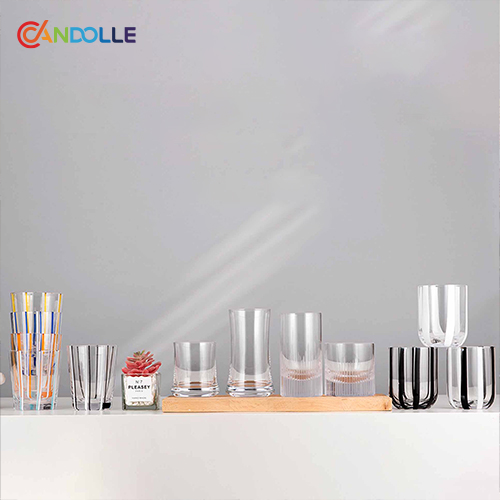
Combine core products with new opportunities. Consider building your range around three groups:
✅️ Core products: Reliable items with established demand, such as everyday drinking glasses or basic kitchenware.
✅️ Differentiated products: Items with distinctive designs, finishes, materials, or packaging that help your business stand out.
✅️ Test products: New designs or seasonal items that you want to validate before committing to larger quantities.
This approach balances stability with room for growth.
Create products that work together
Instead of purchasing individual items piecemeal, consider opting for coordinated collections.
For instance, a glassware collection might include water glasses, wine glasses, a pitcher, and matching tableware (we have provided links here to the CANDOLLE smoke-grey series—featuring wine glasses, water glasses, and a pitcher—to help you curate a cohesive set).
Similarly, a home decor collection can bring together stylistically harmonious pieces such as vases, candlesticks, and decorative bowls (we have also included links to the CANDOLLE ceramic-style, colorful striped series—comprising candle holders, salad/decorative bowls, and vases—to assist you in building a matching collection).
Collections can make product pages more appealing, encourage larger purchases, and simplify merchandising for retail customers.
Avoid unnecessary overlap
If several products serve the same purpose at similar prices, they may compete with each other rather than expand your sales opportunities. Compare their target customers, selling points, and expected margins before selecting them.
What Should You Ask Suppliers at the Canton Fair?
A supplier's booth and sample can tell you a lot, but a focused conversation helps reveal whether the supplier fits your business.
Ask questions in five key areas:
Product specifications
✅️ What materials, dimensions, weights, and finishes are available?
✅️ Can you provide samples and detailed product specifications?
✅️ What quality checks are performed before shipment?
Pricing and order quantities
✅️ What is the minimum order quantity (MOQ) for each design?
✅️ How does the price change with order volume?
✅️ Are sample fees, tooling costs, or customization charges applicable?
Production and delivery
✅️ What is the usual production lead time?
✅️ Can you handle repeat orders with consistent specifications?
✅️ What happens if production is delayed?
Customization and packaging
✅️ Can you customize colors, logos, labels, or gift boxes?
✅️ What packaging options are available for fragile products?
✅️ Can you provide packaging dimensions and carton details?
Compliance and quality control
✅️ Which product tests or certificates are available?
✅️ Can you provide documents relevant to my destination market?
✅️ Can we agree on inspection criteria before production?
Do not assume that every product needs the same certificates. Requirements depend on the product and destination country. For glassware and food-contact items, check the applicable safety requirements before placing an order.
Record the answers, supplier contact details, quoted prices, and sample references. Comparing suppliers becomes much easier when you use the same checklist for each one.
In the realm of hand-blown glassware, CANDOLLE—based in Qixian, Shanxi—is the ideal partner for your customization needs. By combining nearly a century of traditional craftsmanship with modern technological innovation, we ensure your products are brought to life perfectly, creating greater opportunities for your brand.
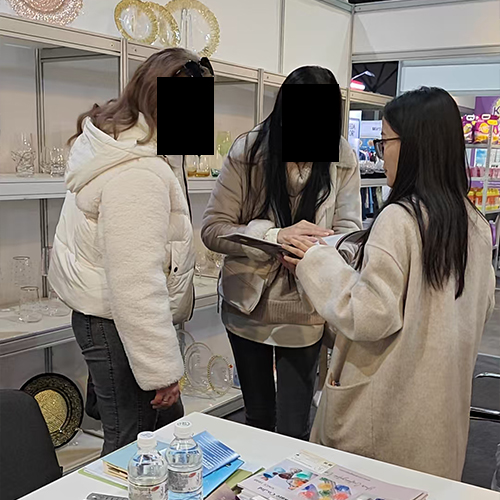
A CANDOLLE representative is explaining glassware to a buyer at the exhibition.
From Samples to Orders: How to Plan Your Purchasing
Finding a suitable supplier is not the end of the sourcing process. A clear purchasing plan helps reduce avoidable mistakes.
Step 1: Shortlist before ordering
Compare suppliers on product quality, total cost, communication, production capacity, and delivery reliability. Do not choose based on the lowest quotation alone.
Step 2: Test samples properly
Check dimensions, weight, finish, usability, packaging, and consistency with the agreed specifications. For fragile products, assess whether the packaging offers suitable protection. If a product is intended for food contact, verify the relevant compliance documentation.
Step 3: Confirm the order details in writing
Before paying a deposit, confirm the product model, specifications, quantity, price, packaging, delivery schedule, payment terms, and agreed quality standards. Clarify who is responsible for inspection and what happens if goods fail to meet the agreed requirements.
Step 4: Start with a manageable order
When testing an unfamiliar product, consider a smaller initial order if the supplier's MOQ and your budget allow it. Track sales, customer feedback, returns, and actual profit before deciding whether to reorder.
Step 5: Plan replenishment early
Include production time, shipping, customs clearance, and safety stock in your inventory plan. Seasonal home decor and gift products may require earlier purchasing than everyday household items.
Conclusion: Make Better Sourcing Decisions at Canton Fair 2026
The Canton Fair is an opportunity to discover products, compare suppliers, and build long-term sourcing relationships. But the best buying decisions come from looking beyond appearance and short-term trends.
Evaluate customer demand, calculate landed costs, build a balanced product mix, ask suppliers specific questions, and test samples before committing to large orders.
Whether you are sourcing glassware, kitchenware, or home decorations, a clear purchasing strategy can help you turn trade fair discoveries into products that fit your market and support sustainable business growth.
CANDOLLE can help you curate the ideal product mix for your market, offering superior-quality glassware at a lower landed cost. Click here to provide your details and get a head start on securing new business opportunities.