
 86 15267043800
 86 15267043800
Qixian Glass: Shanxi Merchants to the World
When buyers look for reliable glassware suppliers in China, they often focus on price, capacity, and delivery time. Beyond this, there is another story worth knowing: the story of Qixian Glass.
Located in Shanxi Province, China, Qixian has developed a strong reputation for handmade and machine-made glassware. Its glassmaking tradition is closely connected with the history of Shanxi merchants, international trade, and generations of skilled craftsmen.
Today, Qixian glassware is not simply a traditional product. It has become an important part of China's glassware manufacturing and export industry, supplying buyers in many international markets.
The History of Qixian Glass
The people of Qixian County did not simply "preserve" an ancient glassblowing technique, but rather localized an imported craft over hundreds of years, eventually developing it into a local industry with international competitiveness today.
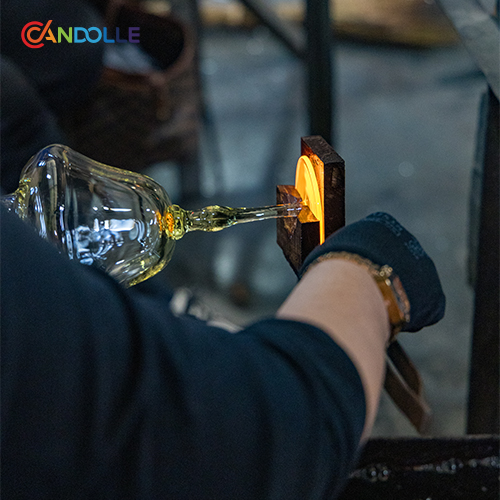
Workers at Qixian Huirong Glass Factory are performing the "bottom-shaping" process on blown goblets.
From Shanxi Merchants to a Local Craft
The history of glassmaking in Qixian can be traced back several hundred years. Around 300 years ago, Shanxi merchants engaged in cross-regional and cross-border trade via the "Tea Road," transporting Chinese goods such as tea overseas while also coming into contact with and bringing back glass products and their manufacturing techniques. This glassmaking technique, originally considered an "imported" skill, gradually took root in Qixian County and, through long-term modifications by local craftsmen, developed its own production tradition.
This history matters to today's buyers because Qixian glassmaking was built around practical production rather than simply artistic display. The local industry has always been closely connected with trade and customer demand.
From Small Workshops to Modern Manufacturing
At the beginning, local workshops mainly produced practical glass items such as lamp covers and household products. Over time, craftsmen developed their own production methods and passed their skills from one generation to another.
During the development of China's export industry, Qixian gradually moved from small workshops toward larger-scale glassware production.
Today, manufacturers in the region combine traditional hand-blown glass techniques with modern production lines. This combination allows suppliers to offer both handcrafted designs and larger-volume orders.
For B2B buyers, this means more flexibility: customized products can be produced with a handmade approach, while standard designs can be manufactured at commercial scale.
How Qixian Glassware Is Made
If glass is the material, then what truly makes it "Qixian Glass" is human experience.
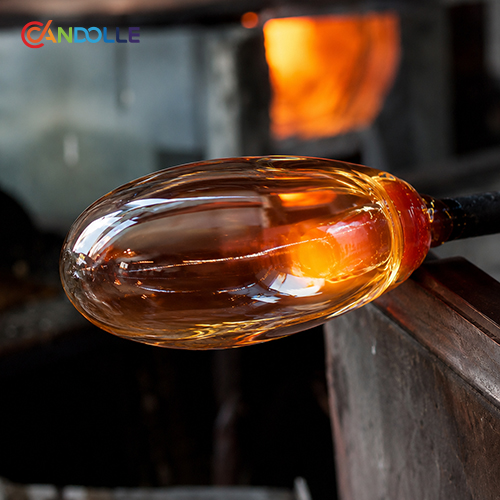
A glass blank is being blown.
The Hand-Blown Glass Process
Handmade glass starts with raw materials that are melted at extremely high temperatures. A skilled worker collects molten glass on a blowing pipe and shapes it through blowing, rotating, stretching, and cutting.
The process may look simple, but it requires years of experience. The craftsman needs to judge the temperature and viscosity of the glass while controlling its shape at the same time.
Handmade Skill Meets Modern Production
One of Qixian's strengths is that handmade production does not have to mean low production capacity.
Manufacturers can use manual techniques for special shapes, premium collections, and customized products, while automated equipment can handle standardized and high-volume orders.
For importers and distributors, this creates a useful balance between craftsmanship, consistency, customization, and production capacity.
Industrial Rise and Product Clusters
Qixian County did not abandon handcrafted blowing due to industrialization; instead, it turned its handcrafted skills into a differentiated advantage for modern industries.
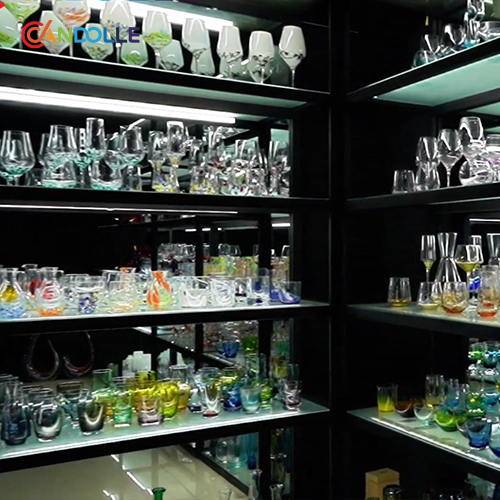
Qixian Huirong Glass Sample Showroom
Today, Qixian glass is no longer just a small workshop run by a few craftsmen, but a complete industrial cluster.
Currently, the area has formed a complete industrial chain, encompassing raw materials, smelting, blowing, processing, packaging, logistics, and export. Industry reports from 2026 show that Qixian has 67 glassware manufacturing enterprises with an annual production capacity of approximately 350,000 tons, over 300 upstream and downstream supporting enterprises, and about 30,000 related industrial workers, with a total industrial chain output value exceeding 4 billion yuan.
Unlike ordinary machine-made glass production bases, Qixian glass enterprises started with hand-blown glassmaking techniques and have further developed and perfected this craft. To date, Qixian glass has reached ten major series and tens of thousands of products. Among these enterprises, Qixian Huirong Glass has perfectly combined hand-blown glassmaking with colored glass, creating numerous distinctive glasswares.
Qixian manufacturers produce a wide range of glass products for different commercial applications.
Drinkware and Tableware
Common products include:
✅️ Wine glasses
✅️ Bowls
✅️ Beer glasses
✅️ Carafes
✅️ Decanters
✅️ Glass cups
These products are commonly used by restaurants, hotels, bars, retailers, and household brands.
Vases and Decorative Glassware
Besides tableware, Qixian County has also seen a boom in the manufacture of household goods and other glassware in recent years. Examples include:
✅️ Vases
✅️ Candle jar
✅️ Ornaments
✅️ Other decorative products.
For brands developing their own collections, these products can often be customized in terms of shape, size, color, surface treatment, packaging, and logo.
Customized Glassware
For B2B purchasing, customization can be more important than simply choosing from a catalog. Depending on the supplier, buyers may be able to request custom shapes, colors, decorations, engraving, packaging, and branding.
Before placing a large order, buyers should confirm MOQ, sample availability, production capacity, quality standards, packaging requirements, and lead time. A clear specification sheet can save a lot of communication later.
If you're currently looking to customize products with a unique style for your brand, feel free to contact us. Our professional services will ensure a smooth and successful customization process.
The Cultural Meaning Behind Qixian Glass
A foreign technology, over hundreds of years, has been recreated in local Chinese societies and formed its own cultural identity.
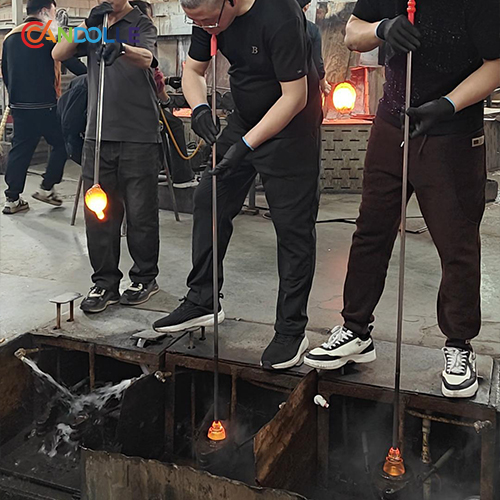
Craftsmen at Qixian Huirong Glass Factory are blowing glassware.
Qixian glass represents more than manufacturing.
It reflects the trading spirit of Shanxi merchants, the patience of traditional craftsmen, and the transformation of a local craft into an international industry.
Handmade glass is also different from a purely machine-made product. Small variations can be part of its character, especially in artisan collections.
For international brands, this story can add value to product marketing. Instead of presenting a glass simply as “Made in China,” buyers can tell a more meaningful story about craftsmanship, regional heritage, and traditional glassmaking.
This can be particularly useful for lifestyle brands, hospitality projects, gift companies, and retailers looking for products with a stronger origin story.
Qixian Glass in the Global Market
Qixian Glass is exported to more than 80 countries and regions.
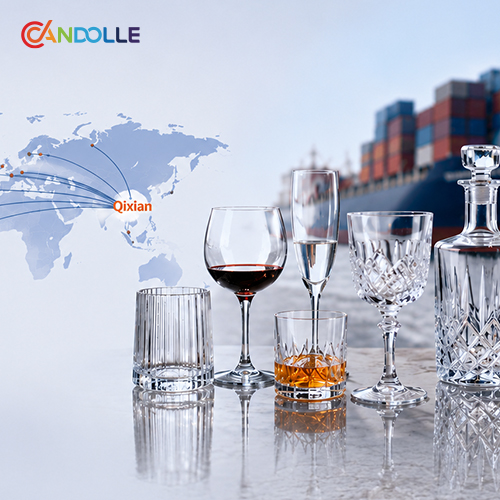
A schematic diagram of Qixian glass going global.
Today, Qixian has become one of China's important glassware production and export centers. Local products are sold to markets across Europe, North America, the Middle East, Southeast Asia, and other regions.
The region's advantage comes from a combination of skilled labor, established supply chains, manufacturing experience, and export capabilities.
For overseas buyers, however, choosing a supplier should go beyond the production location. It is important to evaluate the individual factory's quality control, export experience, product consistency, customization capability, and communication efficiency.
A good sourcing process usually starts with samples, followed by a small trial order before moving to larger volumes.
For wholesalers, importers, distributors, and hospitality suppliers, Qixian offers an interesting sourcing opportunity: the combination of traditional glassmaking skills and modern commercial manufacturing.
Final Thoughts
From humble workshops to a modern industrial cluster, and reaching the world through global trade, Qixian glass represents Shanxi's local industry and is a prime example of the integration of traditional Chinese craftsmanship with modern manufacturing.
Its main advantages lie in its combination of exquisite glassmaking techniques, rich production experience, customization options, and export capabilities. For buyers seeking both large-scale commercial production and the preservation of traditional craftsmanship, Qixian glass is worth considering.
Find a Reliable Glassware Supplier for Your Business
If you are planning to change suppliers, enter the glassware industry, or expand your brand's product line, choosing the right supplier is a vital step in building a successful glassware collection. Professional suppliers can provide the following support for your business:
✅️ Stable product quality and production capacity
✅️ Flexible customization options
✅️ Professional packaging and shipping support
✅️ Rapid response and long-term cooperation