
 86 15267043800
 86 15267043800
Qixian Glass: Hand-blown Glassmaking Process
Hand-blown glassware has a special appeal. No two pieces are exactly the same, yet skilled craftsmen can produce thousands of pieces with a controlled shape, size, and quality.
For buyers, however, handmade glassware is not only about appearance. The real questions are more practical: How is it made? Can the shape be customized? How consistent is the quality? What affects the cost and lead time?
Hand-blown Glassmaking Techniques and Processes
Hand-blown glass is made by shaping molten glass with a blowpipe, human skill, and, when required, a customer-specific mold. Unlike fully automated production, the craftsman's hands play an important role throughout the forming process.
In Qixian County, the traditional hand-blown glassware production process can be roughly divided into several key stages.
1. Selecting the Glass Material
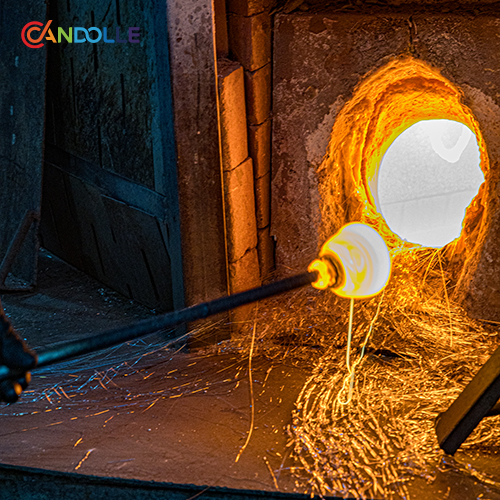
Qixian Huirong Glass: Workers are selecting materials.
The process starts with selecting and preparing the glass material.
The glass must have the right composition and quality for the intended product. Depending on the product, factors such as transparency, color, thermal performance, and final thickness need to be considered.
Then, the craftsman collects the appropriate amount of molten glass onto the blowpipe; this step is usually called "picking the material".
This step may look simple, but the amount of glass collected has a direct impact on the final weight, wall thickness, and dimensions of the product.
2. Blowing the Initial Shape
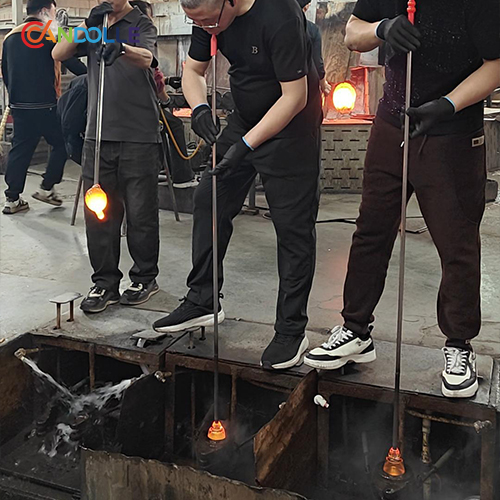
Qixian Huirong Glass: Workers are blowing raw materials.
After collecting the molten glass, the craftsman begins to blow air through the blowpipe.
The glass slowly expands into a hollow form. At the same time, the craftsman continuously rotates the pipe and controls the temperature and movement of the glass.
This creates the basic shape, often called the parison or initial blank.
At this stage, the glass is still hot and flexible. The craftsman's experience is important because the material can quickly become too soft or too hard to shape.
3. Blowing Into the Customer's Mold
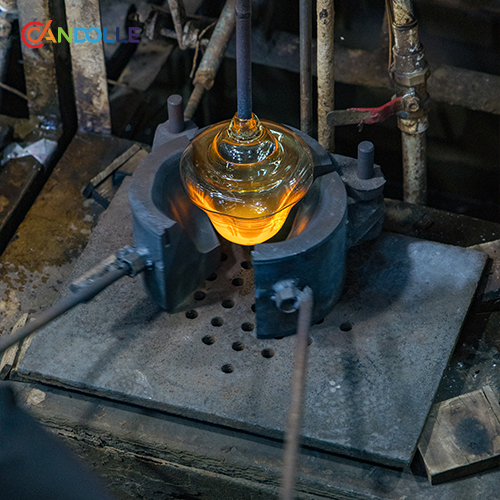
Qixian Huirong Glass: The blown blank enters the mold.
For custom glassware, after completing the previous steps, the blank can be transferred into a mold designed by the customer.
The craftsman places the hot glass into the mold and blows air through the pipe. The internal air pressure pushes the glass against the mold walls, allowing it to take on the required shape.
Therefore, hand-blown products are well-suited for B2B buyers, brands, or businesses to create more flexible glassware designs.
During the initial communication with the supplier, the buyer needs to provide the following information:
✅️ Product drawing
✅️ Size specification
✅️ Logo or pattern
✅️ Target weight
Once the supplier has this information, they can create a mold tailored to your product. The mold helps control the overall shape, while the craftsman still controls the blowing, rotation, temperature, and time.
4. Demolding and shaping
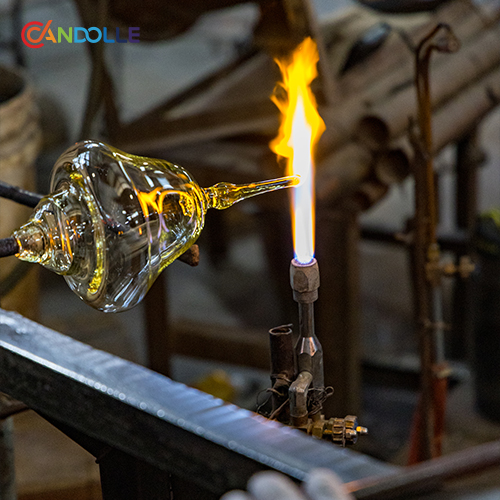
Qixian Huirong Glass: Workers are performing a "stretching" operation, pulling out the stem of a wine glass.
Once the glass reaches the required shape, the craftsman performs the necessary finishing and shaping work before the piece is removed from the mold.
Timing is important. The glass must remain workable enough to release properly, but not so soft that the shape becomes distorted.
After demolding, glassware that needs to be made, such as stemmed glasses or other glassware with handles, will enter the next crucial stage: stretching and pinching the bottom.
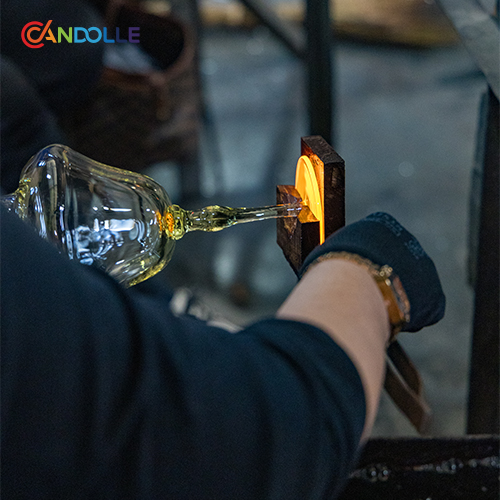
Qixian Huirong Glass: Workers are performing a "bottom-shaping" operation, shaping the bottom of a stemmed glass.
5. Annealing: Removing Internal Stress
Annealing is one of the most important steps in glassware manufacturing.
Freshly formed glass contains internal stress because different areas cool at different speeds. If this stress is not properly controlled, the product may crack or break later. During annealing, the glass is placed in a controlled-temperature annealing lehr and cooled gradually.
For B2B buyers, this process is especially important because good annealing directly affects product durability and quality stability.
A beautiful glass is not commercially useful if it fails during transportation or normal use.
6. Post-processing: Turning a Rough Piece Into Finished Glassware
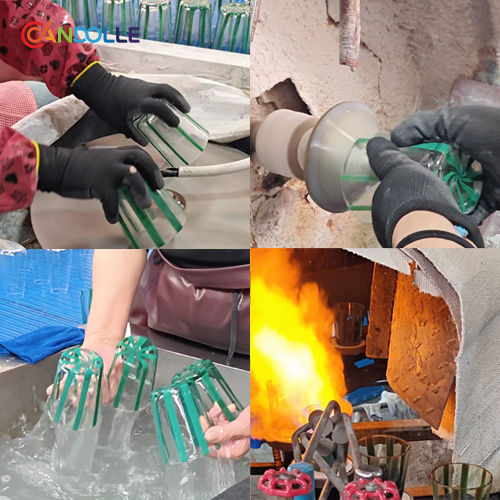
Qixian Huirong Glass: Workers are carrying out various precision operations.
After annealing, glassware cannot be shipped directly; it requires several subsequent finishing processes:
✅️ Cutting
✅️ Grinding
✅️ Drying
✅️ Polishing
✅️ Cleaning
Different products may require different finishing methods, depending on their design and surface treatment.
7. Quality Inspection
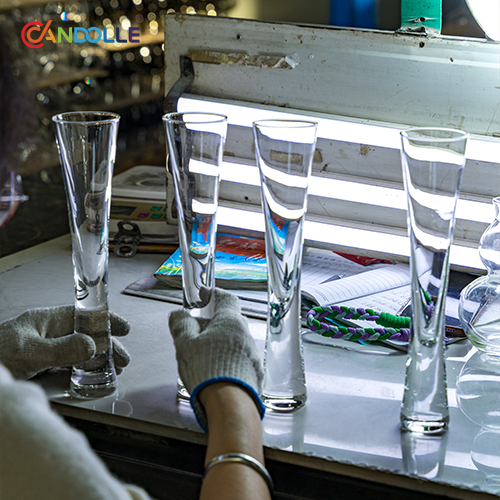
Qixian Huirong Glass: Workers are conducting final quality inspections.
The final and crucial step is quality inspection.
Depending on the buyer's requirements, workers may inspect:
✅ Location, quantity, and size of air bubbles
✅ Surface defects
✅ Cracks or stress marks
✅ Dimensions
✅ Weight
✅ Shape
✅ Wall thickness
✅ Cup body lines
✅ Color consistency
For large B2B orders, establishing inspection standards before production begins is far better than discussing defects after the goods are manufactured.
Advantages and Disadvantages of Hand-blown Glassware
Hand-blown production has clear advantages, but it is not the best solution for every project.
Advantages
Design flexibility is one of its biggest strengths. Handmade production can handle complex shapes and customized designs that may be difficult to achieve through standard automated production.
Another advantage is that it is suitable for small-batch, medium-batch, and special customized orders, making it very friendly to small businesses and start-ups without large-volume needs, especially when products require special shapes, colors, decorations, or surface treatments.
It also offers a strong craftsmanship story. For brands selling premium tableware or lifestyle products, the handmade element can increase perceived value.
Disadvantages
The biggest limitation is consistency.
Although experienced craftsmen can achieve a high degree of consistency, handmade products naturally have small variations in weight, thickness, and dimensions.
Production speed can also be lower than fully automated manufacturing. For very large orders of highly standardized products, machine production may therefore be more efficient.
Since the primary production method for blown glass is manual labor, hand-blown glass is more expensive than machine-made glass, meaning you'll need to allocate a larger budget to its production.
The key is not to ask whether hand-blown glass is "better." Instead, buyers should ask: Which production method is better for my product, quantity, quality requirements, and target price?
The Commercial Value of Hand-blown Glassware
Handmade glassware has value beyond its physical function.
Premium Product Positioning
Restaurants, hotels, retailers, and lifestyle brands can use handmade glassware to create a more distinctive product range.
Small variations can become part of the product's character rather than a defect, provided they remain within agreed quality standards.
Customization and Brand Development
Custom glassware gives brands more freedom to develop products that competitors cannot easily copy.
A unique shape, color, embossed logo, decorative finish, or custom packaging can turn a basic glass into a recognizable branded product.
Storytelling and Customer Experience
Today's consumers often care about where and how products are made.
The story of skilled craftsmen shaping molten glass can become part of the product's marketing content, especially for premium, hospitality, gift, and lifestyle brands.
How to Choose the Right Glassware Supplier
When comparing suppliers, do not look only at the catalog or quotation.
A reliable glassware manufacturer should be able to clearly explain its production process, especially for new products. It's wise to approve samples before mass production. This allows both parties the opportunity to confirm the product before placing large orders.
If you are planning to create a custom hand-blown product, feel free to contact us. Our professional services will ensure a smooth and successful customization process.
From Molten Glass to a Finished Product
From selecting the right amount of molten glass to blowing the initial form, shaping it inside a customer mold, annealing it, and completing cutting, grinding, polishing, cleaning, and inspection, every stage can influence the final product.
For B2B buyers, understanding this process makes sourcing easier. It helps you ask better questions, set realistic expectations, compare suppliers more fairly, and develop customized glassware with fewer surprises.
The real value of hand-blown glass is not simply that it is handmade. It is the ability to combine craftsmanship with commercial customization—turning an idea or drawing into a finished glass product that can be produced, inspected, packaged, and delivered to customers around the world.
Find a Reliable Glassware Supplier for Your Business
If you are planning to change suppliers, enter the glassware industry, or expand your brand's product line, choosing the right supplier is a vital step in building a successful glassware collection. Professional suppliers can provide the following support for your business:
✅️ Stable product quality and production capacity
✅️ Flexible customization options
✅️ Professional packaging and shipping support
✅️ Rapid response and long-term cooperation