
 86 15267043800
 86 15267043800
Will Glass Break in the Freezer?
Yes—but not all glass, and not all drinks.
Whether glass survives the freezer depends on three things:
the type of glass
what's inside it
how quickly the temperature changes
Why Glass Breaks in the Freezer (Two Main Reasons)
1. Thermal Shock from Rapid Temperature Changes
Glass is a poor heat conductor. When warm glass moves straight into the freezer, its outer layer cools and contracts quickly, while the inner part stays warm longer.
This uneven contraction creates internal stress known as thermal shock. If the stress exceeds the glass’s strength, cracks or sudden shattering will occur. Thicker, untreated glass is more vulnerable to this issue.
2. Liquid Expansion When Freezing
Unlike most substances, water expands by 9% when it freezes. When liquid fills a glass vessel, the expanding ice pushes outward against the glass walls. The built-up pressure is strong enough to split ordinary glass, especially sealed or brim-full containers. This is the most common reason for broken glass in home freezers.
Which Types of Glass Are Freezer-Safe?
| Glass Type | Freezer Safe? | Notes |
| Soda-lime glass | Sometimes | Avoid sudden temperature changes |
| Lead-free crystal | Usually yes | If properly manufactured |
| Borosilicate glass | Excellent | Best thermal shock resistance |
| Tempered glass | Good | Still leave expansion space |
Is there a difference between holding wine and holding water?
Yes, the results differ when identical glass containers filled with pure water versus alcohol are placed in the freezer. Pure water freezes at 0°C, whereas alcoholic beverages contain alcohol, meaning their freezing points vary depending on the alcohol content.
| Drink | ABV | Freezes? |
| Water | 0% | Yes |
| Beer | 4-6% | Usually |
| Wine | 12-15% | Yes |
| Sake | 15% | Often |
| Whiskey | 40% | No |
| Vodka | 40% | No |
6 Simple Rules to Prevent Glass from Breaking
✅️ Leave headspace: Always keep 10–15% space for liquid expansion inside the glass.
✅️ Cool gradually: Let warm drinks or food reach room temperature before moving glassware to the freezer.
✅️ Avoid rapid shifts: Never move frozen glass directly to hot countertops or boiling water.
✅️ Do not freeze carbonated beverages: The risks associated with freezing carbonated beverages like Coke, Sprite, and Fanta are doubled.
✅️ Loosen lids: For sealed glass containers, slightly loosen the lid to release pressure during freezing.
✅️ Ensure timely reminders are provided: If your refrigerator has a smart reminder function, it is recommended to set an alert for 1.5 hours so you can take the item out when the time is up. Alternatively, you can use your mobile phone alarm to remind yourself.
Common Questions
Q: Can I put whiskey in the freezer?
A: Yes. Most household freezers operate at around -18°C (0°F), while 40% ABV whiskey freezes at approximately -27°C (-17°F). As a result, the whiskey becomes colder but typically does not freeze solid.
Q: Can wine glasses go in the freezer?
A: Yes, but only briefly. Avoid filling them, and never move them directly from the freezer to hot water.
Q: Can crystal glasses crack in the freezer?
A: Yes. Even lead-free crystal can crack if exposed to thermal shock or freezing liquid expansion.
Q: Can I freeze glass bottles?
A: Only if there is enough space. Never freeze full bottles.
Looking for Glassware Designed for Chilling Spirits?
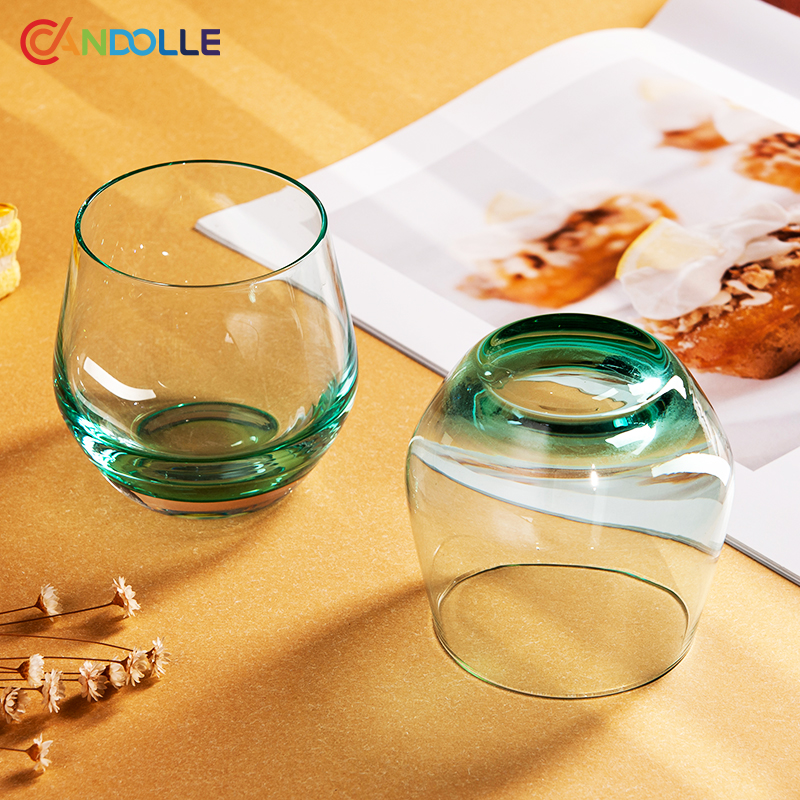
If you are in the market for a whiskey glass, consider the CANDOLLE green egg-shaped whiskey glass. Hand-blown from lead-free crystal glass, it is safe and non-toxic. Its egg-shaped design offers a comfortable grip and excellent stability, ensuring it does not easily slip from your hand during use. By following the instructions above, you can confidently pour spirits into the glass and place it in the freezer.
Conclusion
Glass doesn't break because freezers are too cold—it breaks because of stress. Understand how glass behaves, choose the right material, follow a few simple precautions, and freezing glassware can be perfectly safe.