
 86 15267043800
 86 15267043800
Handcrafted Colored Glassware: The Aesthetics of High-End Tableware
High-end tableware is no longer only about function. For restaurants, hotels, catering companies, and specialty retailers, the right glassware can help create a memorable dining experience while also supporting a premium brand image.
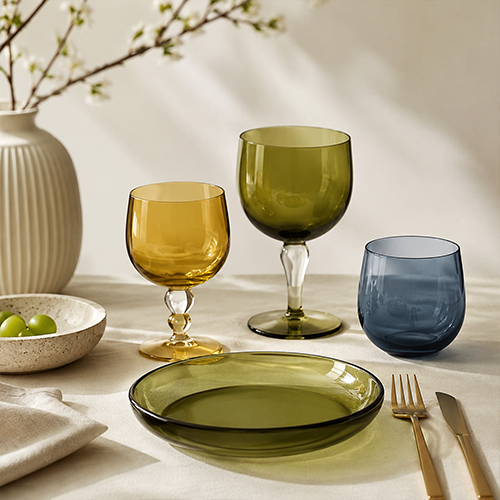
What is High-End Tableware Aesthetics?
High-end tableware aesthetics is not simply about "looking expensive" or using complex decorations. It emphasizes a balance between the following:
✅️ Technique
✅ Material
✅️ Color
✅️ Design
✅️ Lighting
✅️ User experience
For restaurant, hotel, and home furnishing brands, the truly sophisticated aspect of a set of tableware is often not how extravagant it appears at first glance, but rather how it blends naturally into the overall environment after being placed on the table, while simultaneously enhancing the quality of the food, drinks, and space.
Why Handcrafted Glassware Stands Out
Mass-produced tableware is designed for efficiency and consistency. Handcrafted pieces offer something different: character.
Exquisitely crafted glassware can capture candlelight, complement the colors of table settings, and even elevate the appearance of a simple beverage. Therefore, it is suitable for the following occasions:
✅️ Fine dining
✅️ Boutique hotels
✅️ Event venues
✅️ High-end home furnishings
For businesses, this visual difference can also become part of the customer experience. A distinctive glass may encourage guests to take photos, remember the venue, and associate the table setting with quality.
The Pearl of China's Hand-blown Glass Industry: Glassware from Qixian County, Shanxi Province
Qixian County in Shanxi Province is one of China’s most representative regions for hand-blown glassmaking. With a long-standing tradition of high-temperature blowing, stretching, and shaping, Qixian has evolved from a center of traditional glass craftsmanship into a modern glassware manufacturing region serving global markets.
Based in Qixian, we specialize in hand-blown lead-free crystal glassware, with particular expertise in colored glass, fused-in color effects, and customized tableware. By combining traditional craftsmanship with modern production capabilities, we help brands develop distinctive glassware that balances aesthetics, functionality, and commercial practicality.
Choosing Safe and Practical Materials
A premium appearance should never come at the expense of safety.
For food and beverage applications, if the product requires crystal-like transparency and luster while avoiding the artificial addition of lead, then lead-free crystal glass is a worthwhile option. This type of glass offers the following guarantees:
✅️ Free of lead and heavy metals
✅️ Safe for pregnant women and children
✅️ Will not leach harmful substances even after prolonged storage
✅️ Meets environmental recycling standards
For food safety, B2B buyers should request clear information from suppliers regarding material composition and applicable food contact standards, as well as relevant test reports, compliance documents, and product specifications for their target markets.
Colored glass for Modern Table Settings
Colored glass is traditionally associated with decorative art, but its color and light effects can also work beautifully in contemporary tableware.
Colored glass with its soft hues might be more suitable for luxury hotels, while vibrant colors are perfect for restaurants aiming for a striking visual identity. They are typically made into:
✅️ Drinking glasses
✅️ Dessert cups
✅️ Vases
✅️ Candlesticks
✅️ Other table decorations
When selecting colors for commercial use, consider more than appearance. Buyers should check whether the color is part of the glass itself or applied as a surface coating. (click to see the difference) This can affect long-term appearance, cleaning requirements, and durability.
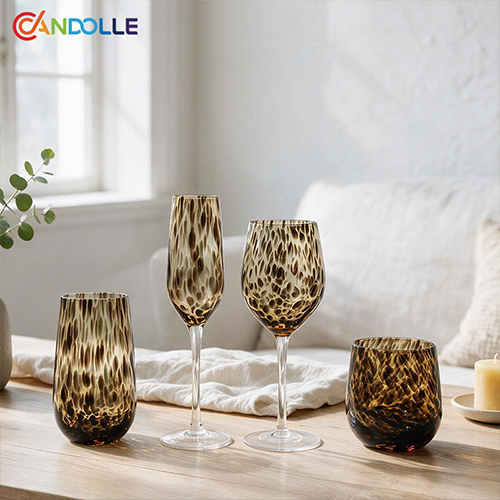
CANDOLLE Vintage Tortoiseshell Glassware: The entire series of glasses is hand-blown, featuring smooth lines and a delicate feel when held. Their clear, warm texture makes them highly collectible and commercially valuable, making them sought after by high-end markets, vintage European and American home decor enthusiasts, and collectors of antique tableware.
The glasses are extensively decorated with an amber leopard print design. The colors of these patterns are fused into the glass at high temperatures, ensuring durability and combining design with practicality. The unique texture displays rich layers and a warm sheen under light. They enhance table settings and meet the needs of specialty bars, hotels, and home settings.
To ensure food safety, all glasses in the series are made of lead-free crystal glass. Whether holding wine, champagne, whiskey, or other spirits or beverages, they are guaranteed to be safe and harmless, greatly preserving the original flavor of the drink. High-quality glass meets the quality requirements of the mid-to-high-end market for glassware.
Handcrafted Colored Glassware: Adding Commercial Value to High-End Tableware Through Aesthetics
For B2B clients, tableware is not merely a functional product, but also an integral part of their brand's visual identity.
Therefore, the core of high-end tableware aesthetics is not simply the pursuit of luxury, but rather the creation of a more memorable dining experience through unique handcrafting techniques, safer glass materials, more fashionable designs, and decorative colors integrated into the interior of the glassware. Furthermore, the more flexible low minimum order quantities are why an increasing number of high-end restaurant and hotel brands are incorporating handcrafted stained glassware as part of their overall brand experience.
A uniquely designed glass can help create a more unified tabletop style in a restaurant; a distinctive set of stained glassware can also become a visual highlight in hotel rooms, dining spaces, and even retail stores.
What B2B Buyers Should Check Before Ordering
A beautiful sample does not necessarily mean the supplier is ready for mass production. To avoid misunderstandings when placing large orders, please consider the following points before confirming your order:
1. Product consistency
Ask how the manufacturer controls size, thickness, weight, color, and shape across production batches.
2. Customization
If you need private-label products, confirm whether the supplier can support custom colors, shapes, packaging, logos, or product dimensions.
3. Packaging and shipping
Glass is fragile, so packaging deserves serious attention. Check whether individual protection, carton strength, drop testing, and export packaging are included in the production process.
4. Quality control
Ask about inspection procedures before shipment. A clear quality standard makes it easier to manage defects, replacements, and future repeat orders.
5. Minimum order quantity and lead time
A supplier may offer excellent craftsmanship but have limited production capacity. Confirm MOQ, sample lead time, bulk production time, and reorder capability before building a collection around the product.
How to Select the Right Style for Your Market
Different customers need different aesthetics. A luxury hotel may prefer elegant, understated colors, while a lifestyle retailer may want bold shapes that stand out on shelves.
For B2B purchasing, it helps to evaluate the product from three angles: brand fit, customer appeal, and commercial practicality.
The best tableware is not necessarily the most complicated. It is the product that looks distinctive, performs reliably, and makes sense for your target market and price point.
From concept to sale may seem simple, but many B2B buyers underestimate this customization process. From sketches to samples, from payment to closing, from shipping to customer unboxing, every step requires a professional supplier to ensure a smooth journey. If you need a partner with deep technical expertise and strong production capabilities, please contact us.
FAQ
Is handcrafted glassware suitable for wholesale orders?
Yes. Many handcrafted glass products can be produced for wholesale, but buyers should confirm production capacity, quality tolerances, packaging, and delivery schedules in advance.
Are handmade pieces exactly the same?
Not always. Small differences in shape, thickness, and color can occur during handcrafted production. Buyers should establish acceptable tolerances with the supplier before ordering.
Is lead-free crystal glass suitable for restaurants?
It can be a suitable choice for food and beverage applications, provided the finished product meets the relevant food-contact requirements in the destination market. Always request supporting compliance documentation.
Can handcrafted tableware be customized?
Often, yes. Depending on the manufacturer, customization may include colors, shapes, dimensions, logos, packaging, and private-label solutions. The available options should be confirmed before sampling.
Final Thoughts
Handcrafted glassware can give restaurants, hotels, retailers, and hospitality brands a distinctive visual identity, but successful B2B sourcing requires looking beyond the sample. Evaluate materials, craftsmanship, consistency, safety documentation, customization, packaging, MOQ, and production capacity together. With the right supplier and clear specifications, handcrafted glassware can become more than attractive tableware—it can become a practical part of your brand experience.
Ready to lead your brand into the high-end tableware market? Contact us to learn more about our products and customization options.