
 86 15267043800
 86 15267043800
What Is the Difference Between Red and White Wine Glasses
Most casual wine drinkers do not realize that red and white wine glasses are not interchangeable. Their unique shapes and sizes are scientifically designed to enhance each wine’s flavor, aroma, and ideal serving temperature. Using the correct glassware drastically improves your tasting experience, while mismatched glasses can flatten flavors and ruin the wine’s natural profile.
Core Difference Overview
The key distinction lies in aeration control and temperature retention. Red wine glasses prioritize air exposure to soften tannins and release rich aromas. White wine glasses limit oxidation and heat transfer to preserve delicate, cool, crisp flavors.
Key Structural & Functional Differences
1. Bowl Size & Shape
Red Wine Glasses: Feature large, wide, round bowls. The broad surface area boosts aeration, softens harsh tannins, and unlocks complex fruity, earthy aromas. The spacious design also allows easy swirling for maximum flavor release.
White Wine Glasses: Have small, narrow U-shaped bowls. The compact shape reduces air contact, preventing over-oxidation that makes white wine taste flat. It also concentrates subtle floral and citrus aromas for a crisp, fresh sip.
2. Stem Length
White Wine Glasses: Longer stems. White wine is served chilled (45–55°F/7–13°C). Long stems let you hold the glass without warming the bowl with hand heat, maintaining the wine’s cold, refreshing taste.
Red Wine Glasses: Shorter stems. Red wine is served warmer (60–68°F/15–20°C), so minor hand heat has little effect. Shorter stems offer better stability for swirling red wine.
3. Rim & Capacity
Red wine glasses have wide, flat rims to spread wine evenly across the palate, balancing bold flavors. They hold 12–18 oz for ample aroma space. White wine glasses have thin, tapered rims that highlight bright acidity, with a smaller 8–12 oz capacity to slow down flavor degradation and warming.
Quick Comparison Table
Feature | Red Wine Glass | White Wine Glass |
Bowl Design | Large, wide, round | Small, narrow, U-shaped |
Stem | Shorter | Longer |
Core Function | Max aeration, soften tannins | Limit oxidation, retain cold temp |
Standard Capacity | 12–18 oz | 8–12 oz |
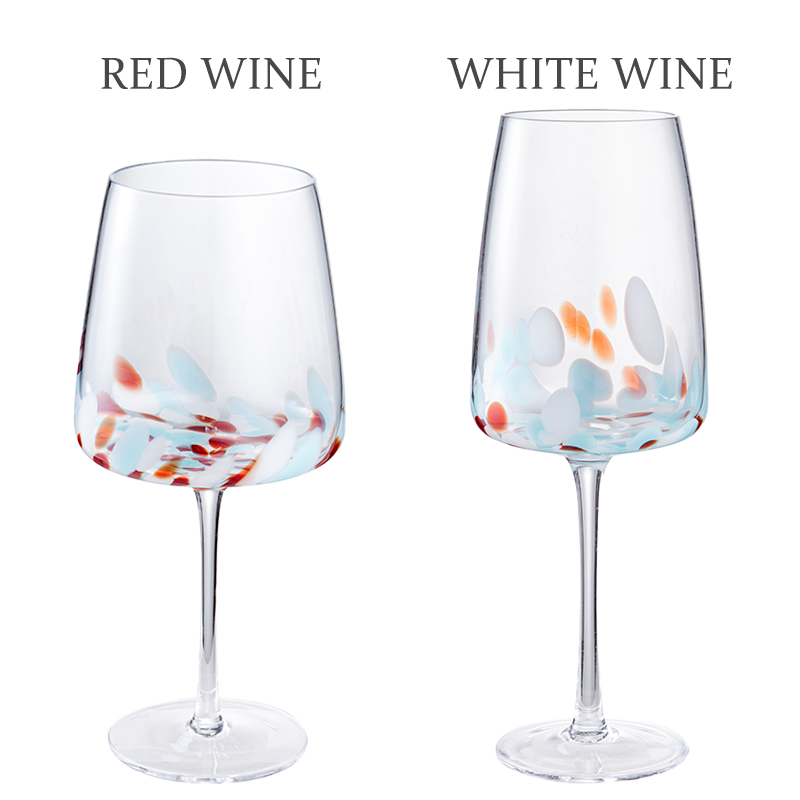
This red and white spotted tall glass series includes standard red wine glasses and white wine glasses, which can help better experience the flavor and taste of different wines. The unique and creative appearance gives you a different feeling from other wine glasses when viewing wine.
How Glass Shape Alters Taste
Wine taste relies heavily on aroma. Red glass aeration softens tannins and amplifies rich, layered scents. White glass with minimal air exposure protects fragile, delicate notes. Using the wrong glass dulls flavor: red glasses make white wine flat and warm, while white glasses leave red wine harsh and muted.
Interchangeable Use: Is It Okay?
Casual drinking: Yes, interchangeable use works fine for everyday sipping. Premium or formal tastings: No. High-quality wines require precise aeration and temperature control to showcase their full complexity. For households wanting versatility, medium universal wine glasses are the best all-around option.
Final Takeaways
Red and white wine glass differences are functional, not cosmetic. Red glasses open up bold, tannic red wines, while white glasses preserve the delicate, crisp character of chilled white wines. Choosing the right glass instantly elevates any wine-drinking experience with minimal effort.